
The Four Horsemen: Defensiveness — Why Love Turns Into Self-Protection During Conflict
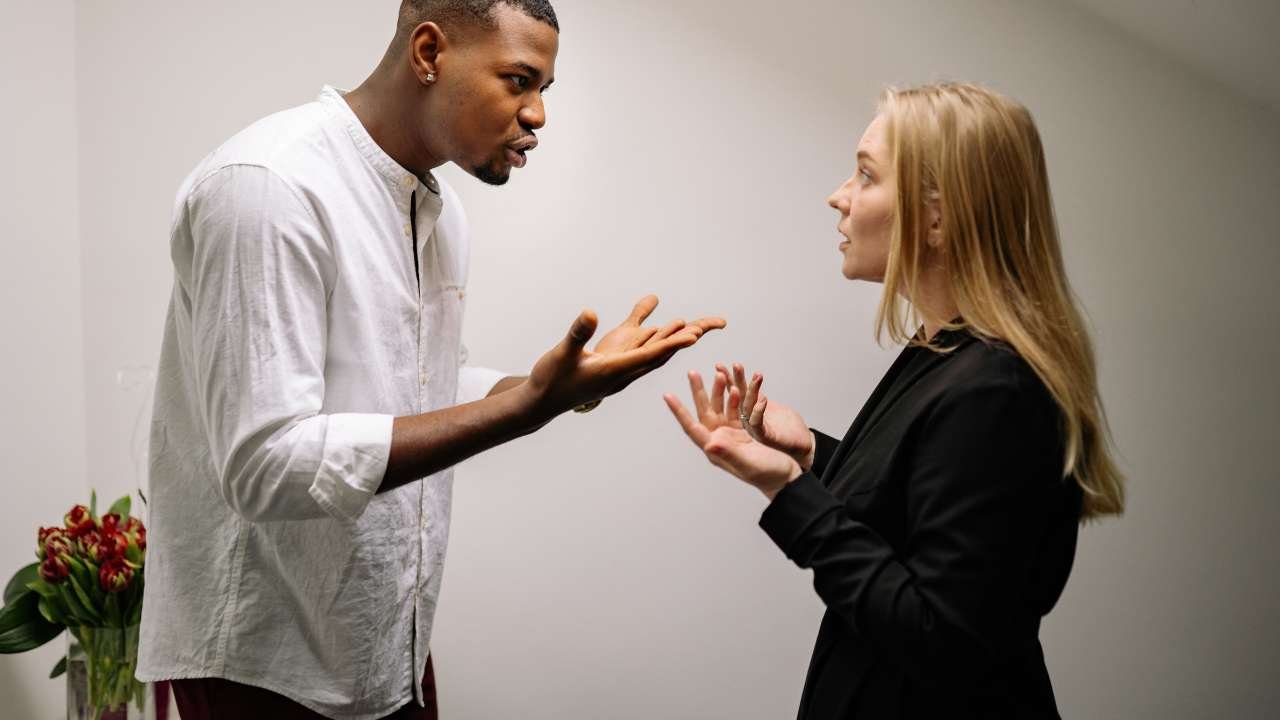
The Four Horsemen: Defensiveness explains one of the most common ways couples lose emotional connection during arguments: one partner brings up pain, and the other immediately starts protecting themselves instead of listening. At Sanpreet Singh, the focus is on helping couples understand why conversations turn into protection instead of connection through a calmer, more mature relationship space at sanpreetsingh.com.
Defensiveness does not always come from bad intention. Often, it comes from feeling attacked, blamed, misunderstood, ashamed, or emotionally exposed. But even when defensiveness is understandable, it can still harm the relationship. Relationship research consistently connects negative communication patterns, emotional reactivity, and poor repair with lower relationship satisfaction, while healthier communication and repair skills support stronger couple stability.
Key Highlights ✨
- Defensiveness often appears when a person feels criticised, cornered, or emotionally unsafe.
- It may feel like self-protection, but to the other partner, it can feel like dismissal or blame-shifting.
- Defensiveness blocks listening, accountability, emotional repair, and genuine understanding.
- The issue is not only what is said; it is how quickly the conversation becomes “me versus you.”
- The healthier response is not self-blame; it is taking responsibility for even a small part of the issue.
- Couples can reduce defensiveness by slowing down, validating emotion, and replacing counterattack with curiosity.
- Love does not need perfect conversations. It needs repairable conversations. Big difference.
Why Defensiveness Feels Natural but Hurts the Relationship ⚡
Defensiveness is one of those relationship habits that feels right in the moment and wrong in the aftermath. When someone says, “You never listen to me,” the immediate instinct may be, “That’s not true. I was busy. You always exaggerate.” The person defending themselves may feel they are simply explaining. The partner hearing it may feel dismissed.
And that is where the real damage begins.
In many couples, defensiveness does not show up as a dramatic explosion. It shows up as quick denial, sharp explanation, sarcasm, counter-blame, emotional shutdown, or “I can never do anything right for you.” Slowly, the relationship becomes less about understanding and more about surviving the next argument.
Defensiveness is human. Repeated defensiveness is harmful. There’s the whole plot twist.
What Is Defensiveness in a Relationship? 🧠
Defensiveness is a self-protective reaction where a person tries to avoid blame, criticism, shame, or responsibility. It often appears when one partner raises a concern and the other partner responds by denying, explaining, counterattacking, excusing, or shifting the focus.
It can sound like:
- “You’re making a big deal out of nothing.”
- “I only did that because you always do this.”
- “So now everything is my fault?”
- “You’re too sensitive.”
- “What about what you did last week?”
- “I can never say anything around you.”
The important thing is this: defensiveness is not the same as explaining yourself. A healthy explanation adds clarity after listening. Defensiveness skips listening and moves straight to self-protection.
When defensiveness becomes a regular pattern, the relationship starts feeling like a courtroom. One partner brings pain. The other presents evidence. Nobody feels comforted. Nobody feels understood.
Why Defensiveness Is Called One of the Four Horsemen 🐎
The Four Horsemen framework describes four communication patterns that can seriously damage relationships when they become chronic: criticism, contempt, defensiveness, and stonewalling. Defensiveness is especially tricky because it often looks reasonable from the inside. The defensive partner may genuinely believe, “I am just telling my side.”
But from the outside, it may feel like emotional dodging.
Defensiveness becomes dangerous because it turns a complaint into a debate. One partner says, “I felt alone when you did not respond.” The other says, “I was busy. Why do you always make everything about you?” Now the original hurt has disappeared, and the couple is fighting about whether the hurt was valid.
The antidote often begins with accepting responsibility for even a small part of the conflict, instead of treating every complaint like a personal attack.
The Hidden Emotion Behind Defensiveness 💭
Defensiveness usually has a softer emotion underneath it. Most people do not become defensive because they are evil masterminds sitting with a villain playlist. They become defensive because something inside them feels threatened.
Defensiveness may hide:
- shame
- fear of failure
- fear of being controlled
- fear of rejection
- feeling unappreciated
- feeling constantly criticised
- feeling emotionally unsafe
- fear that one mistake will define the whole relationship
This is why defensive people often react faster than they think. Their nervous system hears danger before their mind hears meaning. Research and clinical writing on defensive communication often describe defensiveness as a reaction linked to tension, emotional discomfort, threat perception, and the urge to protect oneself rather than stay open.
Defensiveness is often armour worn by someone who does not know how to say, “I feel hurt too.”
How Defensiveness Sounds in Daily Couple Conversations 🗣️
Situation | Defensive Response | What the Other Partner May Feel |
One partner says they feel ignored | “I was busy. Why do you always make it dramatic?” | Their feeling was dismissed |
One partner asks for help | “You never notice what I already do.” | The request became a fight |
One partner raises a concern | “So now everything is my fault?” | The concern became blame |
One partner feels hurt | “You’re too sensitive.” | Their emotion was judged |
One partner asks for change | “What about you?” | Accountability was avoided |
One partner wants reassurance | “I already told you, what more do you want?” | Their need felt like a burden |
The words may look small, but the emotional message can be big: Your feeling is inconvenient. Your concern is unfair. Your pain is an accusation.
That is why defensiveness hurts so much.
Defensiveness vs. Explaining Yourself: What Is the Difference? ⚖️
Many couples get stuck because one person says, “I am not being defensive, I am just explaining.” Sometimes that is true. Sometimes it is not.
The difference is simple: healthy explanation includes listening first. Defensiveness avoids listening by rushing to protection.
Healthy Explanation | Defensive Reaction |
“I hear why that upset you.” | “You misunderstood me again.” |
“I did not mean it that way, but I see the impact.” | “That is not what happened.” |
“Let me understand you first, then I’ll explain.” | “First, let me tell you why you are wrong.” |
“I can take responsibility for my part.” | “This is not my fault.” |
“I was stressed, but I should not have spoken that way.” | “You made me react like that.” |
A healthy explanation opens the door. Defensiveness locks it and then complains that nobody is coming in.
Why Defensiveness Makes Your Partner Feel Emotionally Alone 🥀
When one partner becomes defensive every time a concern is raised, the other partner eventually stops bringing things up. Not because the pain disappears, but because sharing it feels pointless.
They may think:
- “There is no use saying anything.”
- “This will only become another argument.”
- “My feelings will be twisted against me.”
- “I will end up comforting them instead.”
- “I am tired of proving that I am hurt.”
This is how emotional distance begins. Not always with one big betrayal. Sometimes it begins with many small moments where one partner reaches out and the other protects themselves instead of responding.
Over time, this can create distance even when both people still care. A partner who feels unheard does not always leave first. Sometimes they simply stop trying.
The Pattern: Criticism Triggers Defensiveness, Defensiveness Triggers More Criticism 🔁
Defensiveness rarely works alone. It often dances with criticism.
Here is the loop:
- One partner raises a complaint harshly.
- The other feels attacked.
- They deny, defend, explain, or counterattack.
- The first partner feels unheard.
- Their next complaint becomes sharper.
- The defensive partner feels even more attacked.
- The same fight returns with a new costume.
This is why both partners need responsibility. One may need to soften the way they raise concerns. The other may need to stay open long enough to understand the concern.
A harsh complaint may trigger defensiveness, but defensiveness can also train the other person to become louder, sharper, and more desperate to be heard. Then both people start saying, “You are the problem,” while the pattern quietly runs the show.
The Antidote to Defensiveness: Responsibility Without Self-Blame 🌱
The antidote to defensiveness is not surrender. It is not saying, “Everything is my fault.” It is not accepting blame for things you did not do. That would be unhealthy.
The real antidote is taking responsibility for a small, honest part of the problem.
That may sound like:
- “You’re right, I did sound dismissive.”
- “I can see why that hurt you.”
- “I should have told you earlier.”
- “I was stressed, but I still should not have spoken that way.”
- “I understand why you felt alone in that moment.”
- “I did not mean to ignore you, but I see how it landed.”
This small shift can change the whole emotional temperature of the conversation. Taking responsibility does not make you weak. It makes the relationship safer.
As the saying goes, “The truth will set you free.” In relationships, the small truth often sets the argument free too.
How to Replace Defensiveness With Curiosity 🧩
The opposite of defensiveness is not silence. It is curiosity.
When your partner raises a concern, try asking yourself: Am I trying to understand, or am I trying to win? That one question can save a whole evening from becoming a Netflix-worthy emotional thriller.
Pause Before Replying
Most defensive reactions happen too fast. Before responding, take a breath. Let your body settle. You do not have to answer like a lawyer in a cross-examination.
A pause can create enough space for wisdom to enter before ego takes the mic.
Reflect Before Explaining
Before giving your side, reflect what you heard.
Say:
- “You felt ignored when I did not respond.”
- “You felt unsupported yesterday.”
- “You felt like I dismissed your effort.”
- “You wanted me to check in, not just solve the problem.”
Reflection does not mean full agreement. It means you are showing the other person that their feeling entered the room.
Own One Small Part
Even 5% responsibility can soften the whole conversation. You do not have to agree with every detail to own your part.
Try:
- “I could have said that better.”
- “I should not have walked away like that.”
- “I understand why my tone upset you.”
- “I was distracted, and I can see why that felt hurtful.”
This helps couples move away from arguments that keep returning without real repair.
Ask a Repair Question
Repair questions move the conversation from defence to connection.
Ask:
- “What did you need from me in that moment?”
- “How can I say this better next time?”
- “Can we restart this conversation more gently?”
- “What would help you feel heard right now?”
A good repair question says, “I care more about us than about winning this round.”
Why Defensiveness Is So Common in Modern Relationships 📱
Modern couples are often emotionally overloaded. Work pressure, digital distraction, financial stress, family expectations, social comparison, and constant mental noise reduce patience. When people are tired, they have less emotional space to listen well.
A simple concern can feel like one more demand. A small complaint can feel like an attack. A partner’s pain can feel like criticism. That is how defensiveness becomes the default mode.
Many couples are not lacking love. They are lacking emotional bandwidth. And when bandwidth is low, kindness buffers slowly, but defensiveness loads instantly. Classic modern problem.
This is why couples need not only love, but also skills: how to pause, how to listen, how to repair, how to express hurt without blame, and how to accept feedback without collapsing into shame.
How Sanpreet Singh Helps Couples Break Defensive Conflict Patterns 🤝
Sanpreet Singh works with couples who want to understand why the same arguments keep returning, why small conversations escalate, and why one or both partners feel unheard despite trying to explain themselves.
Through sanpreetsingh.com, the focus is on calm, private, structured relationship support where couples can slow down the pattern instead of blaming each other. The work may include understanding emotional triggers, improving communication, rebuilding safety, and learning what happens inside a guided relationship session.
The goal is not to label one partner as “the defensive one” and the other as “the correct one.” Real relationships are rarely that simple. The deeper goal is to understand the cycle: what triggers it, what keeps it alive, and what helps both partners return to each other with more honesty and less armour.
When Defensiveness Needs Professional Support 🚦
Defensiveness needs attention when it becomes the regular ending of almost every difficult conversation.
Couples may need support when:
- every complaint becomes an argument
- one partner always feels blamed
- the other always feels unheard
- apologies feel impossible
- conversations end in silence, sarcasm, or withdrawal
- the same fight keeps returning
- one partner says, “I cannot talk to you anymore”
- both people feel misunderstood
- love is still present, but emotional safety is weakening
The earlier couples address this pattern, the easier it is to repair. Waiting until resentment becomes the third person in the relationship is not exactly the dream plan.
Quick Table: From Defensive Reaction to Relationship Repair 📌
Defensive Habit | Healthier Replacement | Relationship Impact |
Denying | Acknowledge part of the issue | Builds trust |
Counterattacking | Ask one honest question | Reduces escalation |
Excusing | Explain after listening | Creates emotional safety |
Blame-shifting | Own one small part | Opens repair |
Playing victim | Name the hurt calmly | Keeps conversation balanced |
Shutting down | Ask for a pause and return | Prevents emotional distance |
Sarcasm | Speak directly and softly | Reduces emotional threat |
Final Thought: Defensiveness Protects the Ego, but Accountability Protects Love 💛
Defensiveness is understandable. Nobody enjoys feeling criticised, blamed, or exposed. But when defensiveness becomes the main response to pain, love starts feeling unsafe.
A relationship does not need both partners to be flawless. It needs both partners to remain reachable. It needs the courage to say, “I hear you,” even when the ego wants to say, “That is not fair.” It needs enough emotional maturity to understand that taking responsibility for one part of the problem does not mean carrying the whole burden alone.
Defensiveness protects the self for a moment. Accountability protects the relationship for the long run.
For couples who feel stuck in repeated defensive conversations, Sanpreet Singh offers a thoughtful and private space through sanpreetsingh.com to understand the pattern, reduce emotional reactivity, and rebuild communication with more clarity, care, and respect.
FAQs
What is defensiveness in a relationship?
Defensiveness is when a person protects themselves from feeling blamed by denying, excusing, counterattacking, or shifting responsibility.
Why is defensiveness harmful in couples?
It blocks listening and makes the other partner feel unheard, dismissed, or emotionally unsafe.
Is defensiveness always intentional?
No, defensiveness is often automatic and comes from feeling criticised, ashamed, misunderstood, or attacked.
What is the antidote to defensiveness?
The healthier response is to take responsibility for even a small part of the issue without losing self-respect.
How do I know if I am being defensive?
You may be defensive if you quickly explain, deny, blame back, or focus more on proving yourself than understanding your partner.
Can defensiveness ruin a relationship?
Repeated defensiveness can slowly damage trust, communication, emotional safety, and closeness.
How can couples reduce defensiveness?
Couples can reduce defensiveness by slowing down, validating feelings, using softer language, and practising repair.
Is explaining myself the same as being defensive?
No, healthy explanation comes after listening; defensiveness usually happens before understanding the other person.
Why does my partner get defensive so quickly?
They may feel criticised, emotionally unsafe, ashamed, or afraid of being seen as wrong or inadequate.
Can relationship support help with defensiveness?
Yes, structured relationship support can help couples understand defensive patterns and replace them with calmer communication.
The entire framework was developed by Dr Gottman – the entire credit goes to him. We take none of it. And we highly appreciated his efforts to the community
Private, appointment-only
If you want structured guidance (with privacy and boundaries), you can start with a confidential session.